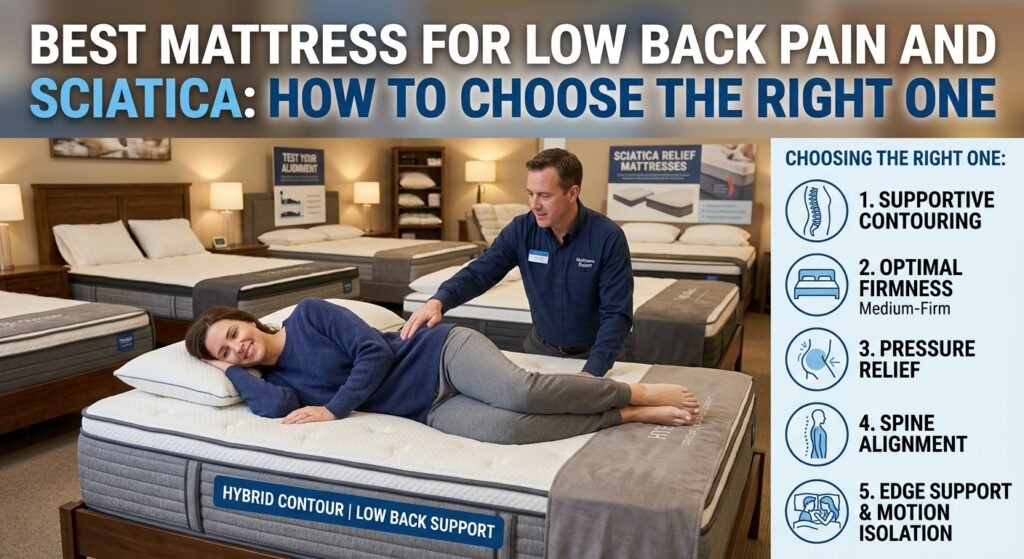

Choosing a mattress can be difficult when low back pain or sciatica makes sleeping uncomfortable. A mattress cannot treat the underlying cause of sciatica or guarantee pain relief, but the right sleep surface may improve comfort, support, and sleep quality.
Research on mattresses and low back pain has found that medium-firm mattresses tend to perform better than very firm or very soft surfaces for several outcomes, including comfort, spinal alignment, and some measures of pain. However, the ideal mattress still depends on factors such as sleeping position, body shape, weight, mattress construction, and personal preference.
That means finding the Best mattress for low back pain and sciatica is not simply about choosing the firmest mattress available. Instead, it involves finding an appropriate balance of support, pressure relief, and comfort.
What Is Low Back Pain and Sciatica?
Low back pain refers to discomfort in the lower part of the back. It can have many causes, so the same mattress may not feel equally comfortable for everyone with back pain.
Sciatica is different because it involves pain that follows the path of the sciatic nerve. Understanding the difference between these conditions can help readers make more realistic decisions about what a mattress can and cannot do.
Understanding Low Back Pain
Low back pain can range from a mild ache to significant discomfort that affects daily activities and sleep. Possible causes include muscle or ligament problems, disc-related conditions, arthritis, and other spinal problems. Because there are many possible causes, persistent or severe back pain should not automatically be attributed to a mattress.
What Is Sciatica?
Sciatica describes pain that travels along the path of the sciatic nerve, which extends from the lower back through the buttocks and down the leg. It commonly affects one side and may involve pain, numbness, tingling, or weakness. Common causes include a herniated disc or bone growth that puts pressure on nerve roots in the lower spine.
Why Back Pain Can Affect Sleep
Pain can make it harder to settle into a comfortable sleeping position or remain asleep. An uncomfortable mattress may add to this problem if it does not provide the level of support or cushioning a person prefers. If symptoms are severe, worsening, or accompanied by neurological problems, professional medical evaluation is more important than simply changing the bed.
Can a Mattress Help With Best Mattress for Low Back Pain and Sciatica?
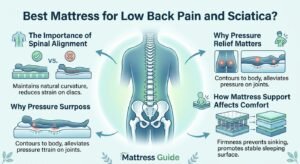
A mattress can influence the way the body is supported during sleep. Research has investigated mattress firmness, pressure distribution, spinal alignment, sleep quality, and low back pain, with systematic reviews generally finding favorable results for medium-firm surfaces.
However, the evidence should be interpreted carefully. Most mattress research focuses on low back pain, not specifically on sciatica. Therefore, it is more accurate to say that a suitable mattress may improve sleeping comfort rather than claim that it treats sciatica.
The Importance of Spinal Alignment
Spinal alignment refers to keeping the body in a comfortable position while lying down. A mattress that allows excessive sinking may feel unstable for some people, while an extremely firm surface may not provide enough cushioning for pressure-sensitive areas.
Research examining mattress designs has identified spinal alignment as an important outcome, and medium-firm mattresses have generally produced favorable results in available studies.
Why Pressure Relief Matters
Pressure relief refers to how effectively a mattress distributes the load created where your body contacts the sleep surface.
For example, side sleepers may place more pressure around the shoulders and hips. A mattress with appropriate cushioning can feel more comfortable in these areas than an extremely firm surface.
How Mattress Support Affects Comfort
Support and firmness are related but are not exactly the same thing. A mattress can have a softer comfort layer while still using a supportive underlying structure.
The goal is not necessarily to find the hardest mattress. Instead, look for a design that supports your body without creating uncomfortable pressure or excessive sinking.
What Makes the Best Mattress for Low Back Pain and Sciatica?
There is no single mattress that can accurately be called the best choice for every person with low back pain or sciatica.
A better approach is to consider the characteristics that affect comfort, including firmness, support, pressure relief, sleeping position, and mattress construction.
Choosing the Right Firmness
Firmness is one of the most noticeable characteristics of a mattress, but it should not be considered by itself. A systematic review found that medium-firm mattresses were associated with improved comfort, sleep quality, and spinal alignment.
A more recent review of orthopedic literature also found that the available evidence most consistently favored medium-firm mattresses over very soft or very firm surfaces.
Finding the Right Level of Support
A supportive mattress should provide enough resistance to prevent excessive sinking while still allowing comfortable contact with the body.
Your body weight and shape can affect how deeply you sink into a mattress. Therefore, two people can experience the same mattress differently.
Pressure Relief for Hips and Shoulders
Hips and shoulders can experience noticeable pressure, particularly for side sleepers. Adequate cushioning may help distribute pressure more comfortably.
This is one reason a mattress should be evaluated based on your actual sleeping position rather than its firmness label alone.
Lumbar Support and Body Contouring
Body contouring describes how closely the mattress follows the shape of your body. Some foam mattresses provide substantial contouring, while latex and certain hybrid designs can offer a more responsive feel. The most comfortable amount of contouring depends on your body and sleeping position.
What Mattress Firmness Is Best Mattress for Low Back Pain and Sciatica?
For people with nonspecific low back pain, medium-firm mattresses have some of the strongest support in the available mattress research. One randomized controlled trial found that participants using a medium-firm mattress reported better outcomes than those using a firm mattress.
This does not mean that every person with sciatica should use a medium-firm mattress. Sciatica has different possible causes, and research specifically connecting mattress firmness with sciatica remains limited.
Is a Medium-Firm Mattress a Good Choice?
For many adults with nonspecific low back pain, medium firmness is a reasonable starting point. A systematic review found that medium-firm mattresses can promote comfort, sleep quality, and spinal alignment.
Still, comfort should be assessed individually. A mattress that feels medium-firm to one person may feel different to another because of differences in body weight, body shape, and construction.
When a Softer Mattress May Be Better
Some sleepers prefer a softer surface because it provides more cushioning around pressure-sensitive areas. However, excessively soft mattresses can allow the body to sink deeply. If that produces an uncomfortable sleeping posture or makes movement difficult, a somewhat firmer option may be more suitable.
When a Firmer Mattress May Be Better
Some people naturally prefer a firmer sleep surface because it feels stable and easier to move on. However, research does not support the idea that the firmest mattress is automatically best for low back pain. Evidence comparing firm and medium-firm mattresses has favored medium firmness in several studies.
Which Mattress Type Is Best Mattress for Low Back Pain and Sciatica?
Different mattress types can provide different combinations of cushioning, responsiveness, and support. Instead of assuming one material is always superior, compare the construction and consider which characteristics match your sleeping preferences.
Memory Foam Mattresses
Memory foam is known for its ability to contour around the body. This can provide a cushioning feel that some sleepers find comfortable.
However, memory foam models vary considerably in density, thickness, firmness, and construction. Some may also feel warmer or make changing positions more difficult than more responsive mattress types.
Latex Mattresses
Latex generally provides a responsive feel with cushioning and less of the deep sinking sensation associated with some memory foam mattresses.
Natural and synthetic latex products also differ in construction, so shoppers should look at the specifications of the individual mattress rather than assuming every latex mattress feels the same.
Hybrid Mattresses
Hybrid mattresses typically combine a coil support system with substantial comfort layers made from materials such as foam or latex.
This construction can provide a combination of support, cushioning, responsiveness, and airflow. The actual feel depends on the number and type of coils, comfort-layer materials, thickness, and firmness.
Innerspring Mattresses
Traditional innerspring mattresses rely primarily on coil systems for support and generally have thinner comfort layers than many hybrid or all-foam mattresses.
They can provide a responsive feel, but pressure relief varies considerably depending on the design and amount of cushioning above the coils.
How to Choose a Mattress Based on Your Sleeping Position
Your sleeping position changes how your body interacts with the mattress. A useful mattress choice should accommodate your usual position while providing a comfortable balance between support and pressure relief.
Best Mattress for Side Sleepers
Side sleepers commonly place more pressure on the shoulders and hips. A mattress with sufficient cushioning can help accommodate these areas while still providing enough support to prevent excessive sinking. The ideal firmness varies according to body shape, weight, and personal preference.
Best Mattress for Back Sleepers
Back sleepers generally need a surface that supports the body without allowing excessive sinking around the hips. Some people with low back discomfort also find it comfortable to place a pillow beneath the knees, although individual responses vary.
Best Mattress for Stomach Sleepers
Stomach sleeping can be uncomfortable for some people with low back problems because of the position it places the spine in. If stomach sleeping increases discomfort, experimenting with another sleeping position may be worthwhile. If you continue to sleep on your stomach, choosing a supportive mattress that does not allow excessive sinking may be more comfortable.
Best Mattress for Combination Sleepers
Combination sleepers change positions during the night. For these sleepers, a mattress that balances pressure relief with responsiveness may be useful because it should provide comfort without making movement unnecessarily difficult.
Important Mattress Features to Consider
When searching for the Best mattress for low back pain and sciatica, look beyond the firmness rating. The construction and features of a mattress can influence how it feels and how effectively it distributes pressure.
Spinal Support
Support is an important part of mattress comfort. A mattress should provide enough resistance to keep your body from sinking excessively while still allowing comfortable cushioning. Research on mattress design has specifically examined spinal alignment and support as factors associated with sleep comfort and back pain.
Pressure Relief
Pressure relief can be particularly important for side sleepers and people who experience discomfort at common contact points. Foam, latex, and hybrid mattresses can all provide pressure relief, but the amount depends on the construction rather than the mattress category alone.
Zoned Support
Some mattresses use different support characteristics in different areas of the mattress. Recent research has identified zoned support and customized mattress systems as potentially useful areas, but differences between studies and mattress designs mean that more evidence is needed before claiming that every zoned mattress is better.
Motion Isolation
Motion isolation matters most when two people share a bed. Mattresses with stronger motion absorption can reduce the amount of movement transferred from one side of the bed to the other. Foam designs often perform well in this area, while coil-based designs can vary depending on their construction.
Temperature Regulation
A mattress can influence how warm or cool you feel while sleeping. Materials, cover fabrics, airflow, room temperature, and mattress construction all play a role. Instead of assuming a particular material will always sleep cool, evaluate the complete design.
Edge Support
Edge support describes how stable the mattress feels near its perimeter. Good edge support can make sitting on the edge easier and can allow sleepers to use more of the mattress surface. Edge performance varies significantly between individual models.
How to Choose the Right Mattress for Your Needs
Choosing a mattress becomes easier when you evaluate your own sleeping habits before comparing products.
Consider Your Sleeping Position
Think about the position in which you spend most of the night. Side sleepers may prioritize cushioning around the shoulders and hips, while back sleepers may place greater importance on consistent support beneath the lower back.
Consider Your Body Weight
Body weight influences how much a person sinks into a mattress. A mattress that feels supportive to a lighter sleeper may feel softer to a heavier sleeper. This is why firmness labels alone cannot tell you exactly how a mattress will feel.
Consider Your Comfort Preferences
Personal preference matters. Some people like the slow, contouring sensation of memory foam. Others prefer the responsiveness of latex or the combination of cushioning and coils found in many hybrids.
Check the Sleep Trial and Warranty
A home sleep trial can make mattress shopping easier because you can evaluate the mattress over multiple nights. Before purchasing, check the trial length, return requirements, warranty coverage, and any conditions that apply to returns or defects.
Common Mistakes to Avoid Best Mattress for Low Back Pain and Sciatica
Choosing a Mattress That Is Too Soft
An overly soft mattress may allow excessive sinking for some sleepers. If your body sinks deeply enough to feel unsupported or makes changing positions difficult, the mattress may not be a good match for your needs.
Choosing a Mattress That Is Too Firm
A very firm mattress is not automatically better for back pain. Research comparing mattress firmness has found favorable results for medium-firm mattresses, so choosing the hardest available option is not supported by the evidence as a general rule.
Ignoring Your Sleeping Position
A mattress should be evaluated according to how you actually sleep. Someone who sleeps primarily on their side may need different cushioning from someone who sleeps mostly on their back.
Buying Without a Trial Period
A mattress may feel comfortable for a few minutes but become less comfortable after several nights. Whenever possible, understand the retailer’s home trial and return policy before making a purchase.
How to Test a Mattress Before Buying
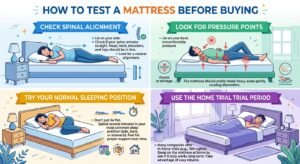
Testing a Best Mattress for Low Back Pain and Sciatica is about more than deciding whether it feels soft or firm.
Check Spinal Alignment
Lie in your usual sleeping position and pay attention to how your body feels. You want a surface that feels supportive without creating obvious areas of excessive sinking or uncomfortable pressure.
Look for Pressure Points
Notice whether your shoulders, hips, or other contact areas feel uncomfortable. If you experience persistent pressure during your normal sleeping position, the mattress may not provide the cushioning you need.
Try Your Normal Sleeping Position
If you normally sleep on your side, test the mattress on your side. If you change positions during the night, try several positions and see whether you can move comfortably between them.
Use the Home Trial Period
A home trial allows you to evaluate the mattress in your normal sleeping environment. Keep track of how comfortable you feel when falling asleep and waking up. Also check the company’s return conditions before the trial begins.
Read more: News tgarchivegaming: A Complete Guide to Gaming News and Updates
When Should You Replace Your Mattress?
Mattresses do not last forever, and their performance can change as materials wear. There is no single replacement date that applies equally to every mattress because lifespan depends on construction, quality, usage, and maintenance.
Signs Your Mattress Is Worn Out
Visible deterioration, permanent impressions, damaged materials, and a noticeable decline in comfort can indicate that a mattress is reaching the end of its useful life.
Mattress Sagging and Loss of Support
Significant sagging can change the way your body is supported. If the mattress no longer feels like it did when it was new and you can clearly identify deterioration, it may be time to consider replacement.
Waking Up With More Discomfort
If you consistently wake up uncomfortable and your mattress is visibly worn, the sleep surface may be worth evaluating. However, new or worsening pain should not automatically be blamed on the mattress. Medical causes should be considered when symptoms persist.
Final Thoughts on Choosing the Right Mattress
Finding the Best mattress for low back pain and sciatica starts with realistic expectations. The available evidence does not identify one mattress that works for everyone. However, research consistently provides useful guidance: medium-firm mattresses are a reasonable starting point for many people with nonspecific low back pain, while support, pressure distribution, spinal alignment, sleeping position, and individual comfort also matter.
When comparing mattresses, focus on the complete sleep experience rather than a single marketing claim. Consider your sleeping position, body weight, preferred feel, pressure points, support needs, and ability to move comfortably.
FAQs About Best Mattress for Low Back Pain and Sciatica
What Is the Best Mattress for Low Back Pain and Sciatica?
A medium-firm mattress may suit many people with low back pain. For sciatica, comfort and individual needs also matter.
Is a Medium-Firm Mattress Good for Sciatica?
It may provide a good balance of support and comfort. However, it does not treat the cause of sciatica.
Is Memory Foam Good for Low Back Pain?
Memory foam can provide pressure relief and body contouring. Its suitability depends on firmness and personal comfort.
Is a Hybrid Mattress Good for Sciatica?
Hybrid mattresses combine cushioning with coil support. The best choice depends on individual comfort and needs.
Can a Mattress Make Back Pain Worse?
An unsuitable mattress may increase discomfort. Persistent or worsening pain should be medically evaluated.