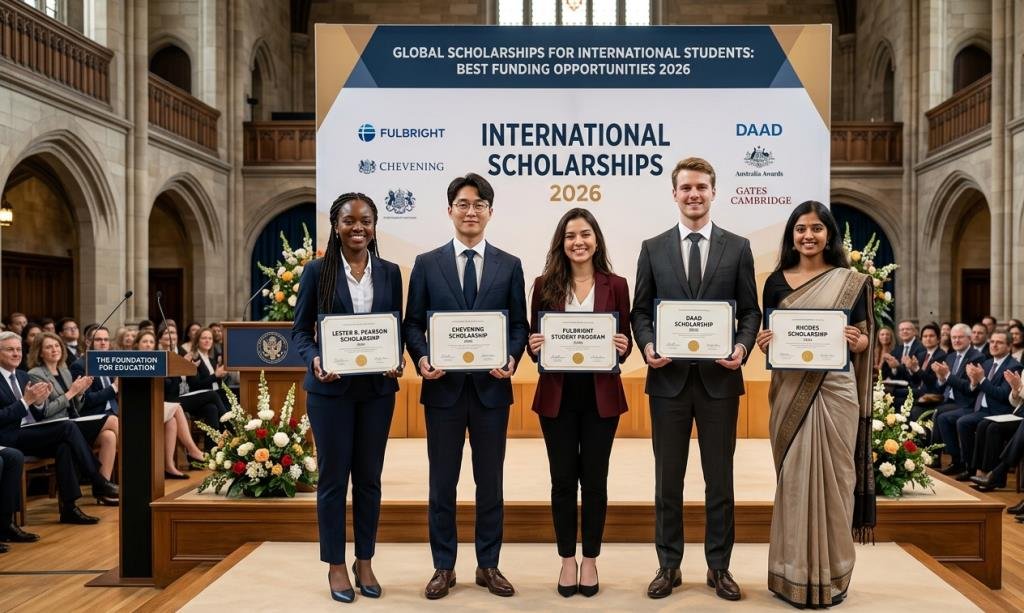

Studying abroad is a dream for millions of students, but the cost of tuition, accommodation, travel, and living expenses often becomes a major challenge. Fortunately, scholarships for international students make higher education more accessible by reducing or even eliminating these financial barriers. Whether you plan to study in the United States, the United Kingdom, Canada, Australia, Germany, or another country, there are thousands of scholarship opportunities available in 2026.
Many universities, governments, private organisations, and charitable foundations offer financial assistance to talented international students. Some scholarships cover tuition fees only, while others include living expenses, travel costs, health insurance, and research funding. Explains everything you need to know about scholarships for international students, including scholarship types, eligibility, application tips, common mistakes to avoid, and the best funding opportunities available in 2026.
Why Scholarships Matter for International Students
Studying overseas offers excellent educational and career opportunities, but the costs can be significant. Scholarships reduce financial stress and allow students to focus on academics instead of worrying about expenses. Some major benefits include:
- Reduced or fully covered tuition fees
- Monthly living allowance
- Accommodation support
- Travel expenses
- Health insurance coverage
- Research grants
- Better career opportunities after graduation
- Access to international academic networks
Receiving a scholarship also strengthens your academic profile and demonstrates excellence, leadership, and commitment.
Types of Scholarships for International Students
Different scholarships are designed for different student needs. Understanding these categories helps you identify suitable opportunities.
Fully Funded Scholarships
These scholarships cover nearly every educational expense, including:
- Tuition fees
- Living costs
- Accommodation
- Airfare
- Health insurance
- Study materials
Fully funded scholarships are highly competitive but provide complete financial support.
Partial Scholarships
Partial scholarships cover specific expenses such as tuition or accommodation while students pay the remaining costs.
Merit-Based Scholarships
Awarded to students with:
- Outstanding academic performance
- High GPA
- Leadership achievements
- Community involvement
- Research excellence
- Exceptional talents
Need-Based Scholarships
These scholarships support students who demonstrate financial need while maintaining satisfactory academic performance.
Government Scholarships
Many governments invest in international education by offering scholarships to attract talented students.
University Scholarships
Most universities provide scholarships directly to international applicants based on academic achievement, sports, research, or leadership.
Subject-Specific Scholarships
Available for students studying fields such as:
- Engineering
- Medicine
- Computer Science
- Business
- Agriculture
- Environmental Science
- Education
Read More: Brumeblog com Smart Digital Solutions and Insights Guide – Everything You Need to Know
Best Scholarships for International Students in 2026
The table below highlights some of the most recognised scholarship programmes available to international students.
| Scholarship | Country | Funding Type | Study Level | Main Benefits |
| Fulbright Program | USA | Fully Funded | Master’s & PhD | Tuition, living allowance, travel |
| Chevening Scholarship | UK | Fully Funded | Master’s | Tuition, accommodation, flights |
| Erasmus Mundus | Europe | Fully Funded | Master’s | Tuition, monthly stipend, travel |
| Australia Awards | Australia | Fully Funded | Undergraduate & Postgraduate | Tuition, living expenses |
| Vanier Canada Graduate Scholarships | Canada | Partially Funded | PhD | Research funding |
| DAAD Scholarships | Germany | Fully Funded | Master’s & PhD | Tuition support, stipend |
| MEXT Scholarship | Japan | Fully Funded | Undergraduate & Graduate | Tuition, living allowance |
| Swiss Government Excellence Scholarships | Switzerland | Fully Funded | Research & PhD | Research funding, living expenses |
Eligibility for Scholarships for International Students
Every scholarship has different eligibility requirements, but many ask applicants to meet the following criteria:
- Excellent academic performance
- Valid admission offer (for many scholarships)
- English language proficiency where required
- Strong personal statement
- Letters of recommendation
- Leadership experience
- Community service activities
- Research proposal (for postgraduate programmes)
Always read the eligibility criteria carefully before applying.
Documents Required
Most scholarship applications require supporting documents. Preparing these in advance saves valuable time. Typical documents include:
- Academic transcripts
- Degree certificates
- Passport copy
- Curriculum Vitae (CV)
- Personal statement
- Motivation letter
- Recommendation letters
- Language test scores
- Research proposal (if applicable)
- Portfolio (for creative programmes)
Ensure all documents are updated, accurate, and professionally presented.
How to Apply for Scholarships for International Students
A successful scholarship application requires careful planning.
Step 1: Research Suitable Scholarships: Focus on scholarships that match your academic background, nationality, career goals, and financial needs.
Step 2: Check Eligibility: Review every requirement before investing time in the application.
Step 3: Prepare Documents: Collect all required documents well before the deadline.
Step 4: Write a Strong Personal Statement: Your personal statement should explain:
- Academic achievements
- Career ambitions
- Leadership experiences
- Community involvement
- Why you deserve financial support
Make your statement authentic and specific rather than using generic content.
Step 5: Request Recommendation Letters Early: Choose teachers, professors, or employers who know your abilities well and can provide meaningful recommendations.
Step 6: Submit Before the Deadline: Avoid last-minute submissions. Technical issues can occur near deadlines.
Step 7: Prepare for Interviews: Some scholarship programmes include interviews. Practice explaining your academic goals, leadership experiences, and future plans confidently.
Countries Offering Excellent Scholarships
| Country | Popular Scholarship Programmes | Approximate Scholarship Value |
| United States | Fulbright Program, Yale Scholarships, Stanford Knight-Hennessy, AAUW International Fellowships | US$20,000–US$70,000 per year (many fully funded programmes cover full tuition, living expenses, travel, and health insurance) |
| United Kingdom | Chevening Scholarships, Commonwealth Scholarships, Gates Cambridge Scholarships | £18,000–£35,000 per year or fully funded (tuition, monthly stipend, airfare, and visa costs) |
| Canada | Vanier Canada Graduate Scholarships, Lester B. Pearson International Scholarship, UBC International Scholars Program | CA$20,000–CA$50,000 per year; some scholarships cover full tuition and living expenses |
| Australia | Australia Awards Scholarships, Destination Australia Scholarships, Research Training Program (RTP) | AU$30,000–AU$75,000 per year including tuition, living allowance, travel, and health insurance |
| Germany | DAAD Scholarships, Deutschlandstipendium | €934–€1,500 per month plus tuition support, travel allowance, and research funding (depending on the programme) |
| Japan | MEXT Scholarship, JASSO Scholarships | ¥117,000–¥145,000 per month plus tuition waiver and airfare for most MEXT recipients |
| Europe | Erasmus Mundus Joint Master’s Scholarships, Government Scholarships across EU countries | €1,000–€1,400 per month, full tuition waiver, travel allowance, and installation grant for eligible programmes |
How to Improve Your Scholarship Application
Competition is increasing every year. Strong applicants usually demonstrate more than good grades. Improve your chances by:
- Maintaining excellent academic results
- Participating in volunteer activities
- Building leadership experience
- Developing research skills
- Writing an original personal statement
- Gaining relevant work or internship experience
- Improving communication skills
- Applying for multiple scholarships
Consistency and preparation often make a significant difference.
Common Reasons Scholarship Applications Are Rejected
Many applications fail because of avoidable mistakes. Common errors include:
- Missing deadlines
- Incomplete application forms
- Weak personal statements
- Poor recommendation letters
- Ignoring eligibility requirements
- Grammar and spelling mistakes
- Submitting incorrect documents
- Copying application essays
Review your application carefully before submission.
When Should You Apply?
Most scholarship applications open several months before university admissions. A recommended timeline:
- Research scholarships: 10–12 months before admission
- Prepare documents: 8–10 months before
- Take language tests: 7–9 months before
- Request recommendations: 6–8 months before
- Submit applications: According to scholarship deadlines
- Prepare for interviews: After shortlisting
Starting early reduces stress and increases application quality.
Can Undergraduate Students Apply?
Yes. Many scholarship programmes support undergraduate students. Available funding may include:
- Full tuition
- Partial tuition
- Living allowance
- Housing support
- Books and study materials
- Travel grants
Each university has its own scholarship policies.
Can Graduate Students Receive Fully Funded Scholarships?
Graduate students often have access to more fully funded opportunities, especially in research-based master’s and doctoral programmes. Funding may include:
- Tuition fees
- Monthly stipend
- Research funding
- Laboratory expenses
- Conference travel
- Health insurance
Students with strong academic records and research interests generally have greater opportunities.
Tips for Writing a Strong Scholarship Essay
Your scholarship essay is one of the most important parts of the application. Keep these tips in mind:
- Be honest and authentic.
- Share meaningful personal experiences.
- Explain your academic and career goals clearly.
- Demonstrate leadership and social impact.
- Show how the scholarship will help you achieve your objectives.
- Use simple, professional language.
- Proofread carefully before submitting.
A thoughtful, well-structured essay often leaves a lasting impression on selection committees.
Future Trends in Scholarships for International Students
Scholarship programmes continue to evolve to meet global education needs. In 2026, students are likely to see:
- More digital application systems
- Increased funding for STEM subjects
- Greater support for sustainability and climate research
- More scholarships focused on artificial intelligence and technology
- Expanded opportunities for developing countries
- Stronger emphasis on leadership and community engagement
Students who prepare early and stay informed will be better positioned to take advantage of these opportunities.
Conclusion
Scholarships for international students continue to make global education more accessible by helping talented individuals overcome financial barriers. Whether you are pursuing an undergraduate degree, a master’s programme, or doctoral research, there are funding opportunities available across many countries and academic disciplines.
Success depends on careful planning, meeting eligibility requirements, preparing strong application documents, and submitting everything before the deadline. By researching scholarship options early and presenting a genuine, well-prepared application, you can significantly improve your chances of receiving financial support in 2026.
Investing time in your scholarship search today could make studying abroad more affordable and open doors to valuable academic, professional, and personal opportunities.
FAQs
Q1. What are scholarships for international students?
Ans: Scholarships for international students are financial awards provided by governments, universities, organisations, or foundations to help students from other countries pay for their education abroad. They may cover tuition fees, living expenses, travel, or other study-related costs.
Q2. Who can apply for scholarships for international students?
Ans: Eligibility varies by programme, but applicants typically need strong academic records, proof of admission or application to a recognised institution, and supporting documents such as recommendation letters and personal statements.
Q3. Are fully funded scholarships available in 2026?
Ans: Yes. Many fully funded scholarships are expected to be available in 2026, covering tuition, accommodation, monthly living expenses, travel costs, and health insurance.
Q4. Which countries offer the most scholarships for international students?
Ans: Popular destinations include the United States, United Kingdom, Canada, Australia, Germany, Japan, Switzerland, and several European countries.
Q5. Can undergraduate students receive scholarships?
Ans: Yes. Many universities and governments offer scholarships specifically for undergraduate international students based on academic achievement, financial need, or other criteria.
Q6. What documents are usually required for scholarship applications?
Ans: Common requirements include academic transcripts, passport copy, CV, personal statement, recommendation letters, language proficiency test results, and sometimes a research proposal or portfolio.
Q7. How can I improve my chances of receiving a scholarship?
Ans: Maintain excellent academic performance, participate in leadership and volunteer activities, prepare a strong personal statement, obtain quality recommendation letters, and submit complete applications before the deadline.