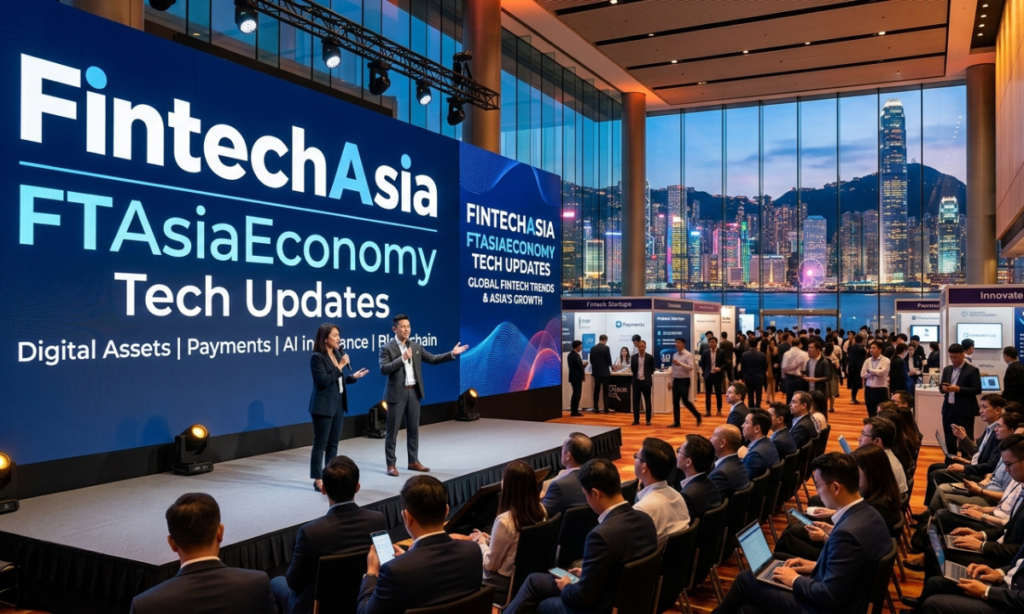

Asia’s digital economy is developing rapidly as financial services, payments, artificial intelligence, cloud computing, and digital platforms become more closely connected. The Asian Development Bank describes digitalization as a force reshaping finance, jobs, government, supply chains, and economic inclusion across Asia and the Pacific.
For readers interested in these changes, FintechAsia FTAsiaEconomy Tech Updates provides a useful topic around which to explore developments in fintech and the wider digital economy. Understanding these trends can help businesses, technology professionals, and everyday consumers see how financial technology is changing the way people work, pay, save, and access services.
What Is FintechAsia FTAsiaEconomy Tech Updates?
The phrase FintechAsia FTAsiaEconomy Tech Updates is used online in connection with discussions about fintech, technology, financial markets, and Asia’s changing digital economy. Current online coverage associated with the phrase discusses subjects including digital finance, technology trends, regulation, payments, and business developments.
More broadly, fintech means using technology to improve or deliver financial services. This includes digital banking, electronic payments, online financial platforms, automated financial tools, and other technology-enabled services.
What Kind of Tech Updates Are Covered?
Technology updates in this area can cover digital payments, mobile banking, artificial intelligence, cloud infrastructure, cybersecurity, blockchain, tokenization, and financial applications. These developments are increasingly interconnected. For example, BIS research explains that AI and digital finance are changing how financial services are delivered while also creating new questions around financial stability and risk.
Why Asia’s Digital Economy Matters
Asia is home to large and rapidly developing digital markets. Digital technologies are affecting businesses, financial institutions, consumers, and governments across the region. UN Trade and Development notes that the digital economy is expanding quickly, but the benefits are not distributed equally. Expanding digital access therefore needs to be accompanied by skills, productive opportunities, and policies that support wider participation.
The Growth of Asia’s Digital Economy
Digital Transformation in Asian Markets
Digital transformation means more than putting existing services online. Organizations are changing how they communicate, process information, serve customers, and conduct transactions.
ADB research highlights digital transformation across finance, government, supply chains, energy, and other parts of the economy. It also emphasizes the importance of strong institutions and policies that prevent digital progress from increasing existing inequalities.
Rise of Digital Businesses
Online platforms have created new ways for companies to reach customers and conduct business. Digital tools can support online sales, customer management, payments, communication, and international activity. As these systems become more common, businesses increasingly need to understand both technology and the financial infrastructure that supports digital commerce.
Growth of Online Financial Services
Banking and other financial services are moving toward digital channels. Mobile applications, digital accounts, electronic payments, and technology-enabled financial products allow customers to complete many activities without visiting a physical branch. The IMF has examined the growth of digital banking and the use of technologies such as cloud computing and artificial intelligence in financial services.
Major Fintech Trends Across Asia
Digital Banking and Mobile Payments
Digital banking has changed the way customers interact with financial institutions. Mobile applications can provide convenient access to accounts, payments, transfers, and other services.
Mobile and electronic payments are also becoming an important part of regional financial systems. The IMF’s 2026 analysis of ASEAN digital payments describes digitalization as a force improving payment efficiency and inclusion while also creating financial-sector risks that need attention.
Fintech Startups and Innovation
Fintech startups often focus on specific financial problems, including payments, lending, financial management, and business services. Their specialized products can encourage competition and introduce new approaches.
Open banking and open finance are another important area. Across Asia-Pacific, countries are developing different approaches to data sharing, governance, and regulation, creating both opportunities and implementation challenges.
Cross-Border Payments
Cross-border payments are especially important in Asia because the region has extensive trade, investment, tourism, and remittance activity. ADB’s 2026 regional integration report identifies stronger cross-border payments and financial infrastructure as important priorities for deeper regional integration.
Digital Financial Services
Digital financial services extend beyond simple payments. They can include digital banking, electronic money, online financial products, and other technology-enabled services. These tools can improve convenience and potentially expand access, but responsible development also requires consumer protection, cybersecurity, appropriate regulation, and reliable infrastructure.
Technology Trends Shaping Asia’s Future
Artificial Intelligence and Automation
Artificial intelligence is becoming one of the most closely watched technologies in finance. AI can support areas such as analysis, customer service, fraud management, and operational processes. BIS research notes that AI and digital finance are reshaping financial services and risk management. The technology offers potential efficiency gains but also raises questions about governance, concentration, cybersecurity, and financial stability.
Blockchain and Digital Assets
Blockchain and related technologies are another part of the evolving financial landscape. Tokenization, for example, involves representing assets or claims digitally and is receiving increasing attention from financial institutions and policymakers.
BIS identifies tokenization as an important element in current discussions about the future of finance, while also emphasizing the need to consider its implications for financial stability and market structure.
Cloud Computing
Cloud computing can provide the infrastructure needed to operate modern digital financial services. It can support scalable systems and help organizations deploy technology without relying entirely on traditional infrastructure. The IMF has identified cloud computing as one of the technologies being used in the development of digital banking.
Cybersecurity and Data Protection
Greater digital activity also means greater exposure to cybersecurity risks. Financial organizations handle valuable information and transactions, making security and privacy essential. As digital payment systems evolve, fraud and cyber threats also evolve. BIS highlights cybersecurity, fraud, and scams among the challenges that accompany changes in modern payment systems.
How Fintech Is Changing the Financial Industry
Transforming Traditional Banking
Technology is changing traditional banking rather than simply replacing it. Banks are adopting digital channels, automation, cloud technologies, and new partnerships to meet changing customer expectations. Digital transformation can therefore create cooperation as well as competition between established financial institutions and fintech companies.
Improving Financial Accessibility
One important potential benefit of fintech is improved access to financial services. Digital channels can make certain services available to people and businesses that may have limited access to traditional banking infrastructure. ADB research highlights fintech’s potential contribution to financial inclusion while also noting the need to manage regulatory and financial-stability risks.
Making Payments Faster and Easier
Digital payment systems can make everyday transactions more convenient and can support online commerce. Their importance becomes even greater when payments need to move between different countries or financial systems. ASEAN’s continuing development of digital payment connectivity demonstrates how payment technology can support both economic activity and regional integration.
Benefits of Asia’s Digital Transformation
Better Financial Access
Digital services can provide additional ways for consumers and businesses to access financial products. When combined with appropriate infrastructure and consumer protection, fintech can contribute to broader financial inclusion.
Improved Business Efficiency
Businesses can use digital tools to automate tasks, communicate with customers, process transactions, and manage information. This can improve efficiency and allow companies to respond more quickly to changing market conditions.
New Opportunities for Startups
Digital transformation creates opportunities for startups that can solve specific problems with technology. Fintech entrepreneurs can develop products for payments, financial management, lending, and other specialized areas. However, innovation needs to be supported by sustainable business models, appropriate compliance, security, and risk management.
Greater Digital Connectivity
Digital infrastructure connects consumers, companies, governments, and financial institutions. ADB’s work on digital transformation emphasizes the importance of connectivity, digital public infrastructure, cybersecurity, and skills in creating inclusive digital development.
Challenges Facing Asia’s Digital Economy
Cybersecurity and Privacy Concerns
The growth of digital finance increases the importance of protecting personal and financial information. Fraud, scams, cyberattacks, and data misuse can undermine consumer confidence. Strong security practices and responsible data management therefore need to develop alongside new financial technologies.
Regulatory and Compliance Challenges
Technology can develop faster than regulations. Policymakers must balance innovation with consumer protection, financial stability, competition, and market integrity. This is particularly challenging when financial services operate across borders and different countries apply different regulatory frameworks.
Digital Inequality
Not everyone has the same access to reliable internet, devices, digital skills, or financial services. UNCTAD stresses that digital progress remains uneven, making inclusion an important part of future digital development.
Consumer Trust and Online Safety
People need confidence that digital financial services are secure, reliable, and transparent. Without trust, even useful technologies can struggle to gain widespread adoption. For this reason, consumer protection should remain an important part of fintech development.
The Future of Fintech and Digital Technology in Asia
Emerging Fintech Innovations
The next phase of fintech is likely to involve deeper connections between AI, digital payments, cloud computing, digital infrastructure, and other emerging technologies. The direction of development will depend not only on technological capabilities but also on regulation, investment, cybersecurity, and consumer demand.
The Role of Artificial Intelligence
AI will remain a major area of interest in financial technology. Newer AI systems are being studied for applications across payments, financial services, and decision-making. The IMF has also examined how so-called agentic AI could eventually affect payment authorization, compliance, settlement, and operational processes, although adoption remains at an early stage.
Future Digital Payment Trends
Digital payments are likely to remain central to Asia’s fintech development. Faster and more connected payment systems can support consumers, businesses, trade, and regional integration. Improving cross-border payment infrastructure will be particularly important as Asian economies become more interconnected.
Expansion of Digital Financial Services
Digital financial services are likely to continue expanding as connectivity and digital infrastructure improve. However, future growth needs to be inclusive and secure. ADB’s 2026 digital strategy emphasizes connectivity, skills, cybersecurity, privacy, data governance, and responsible AI as important elements of digital transformation.
Conclusion
Asia’s digital economy is evolving rapidly through fintech, artificial intelligence, digital payments, cloud computing, and other emerging technologies. These changes are creating new opportunities for businesses and consumers while also introducing challenges related to cybersecurity, regulation, privacy, and digital inclusion.
FintechAsia FTAsiaEconomy Tech Updates can be useful for following discussions around these developments, including fintech innovation, digital finance, technology trends, and the changing financial landscape across Asia.
FAQs
What Is FintechAsia FTAsiaEconomy Tech Updates?
FintechAsia FTAsiaEconomy Tech Updates refers to online coverage of fintech, technology, digital finance, and economic developments across Asia.
What Topics Are Covered by FintechAsia FTAsiaEconomy Tech Updates?
Topics may include digital payments, fintech innovation, artificial intelligence, digital banking, blockchain, cloud technology, and cybersecurity.
Why Are FintechAsia FTAsiaEconomy Tech Updates Important?
These updates help readers follow changes in Asia’s rapidly developing digital financial and technology sectors. They can provide useful context for understanding new technologies, market trends, and digital transformation.
How Does FintechAsia FTAsiaEconomy Tech Updates Relate to Fintech?
The topic focuses on developments such as digital banking, mobile payments, financial technology, and other digital financial services. These innovations are changing how businesses and consumers access and use financial services.
Who Can Benefit From FintechAsia FTAsiaEconomy Tech Updates?
Entrepreneurs, investors, technology professionals, students, and general readers interested in Asia’s digital economy may find the updates useful.